
Strategy
RSF focuses on investment opportunities in the senior living sector and in opportunistic commercial real estate. The firm’s investment strategy centers on deep industry knowledge, niche markets, off-market deal sourcing, downside protection, and active asset management. Beginning with $22mm in committed capital in its first Fund (1998), RSF is now investing Fund VIII with over $300mm in committed capital and has raised over $1.3B in committed capital with full investment discretion across 10 Fund vehicles over the last 25+ years.
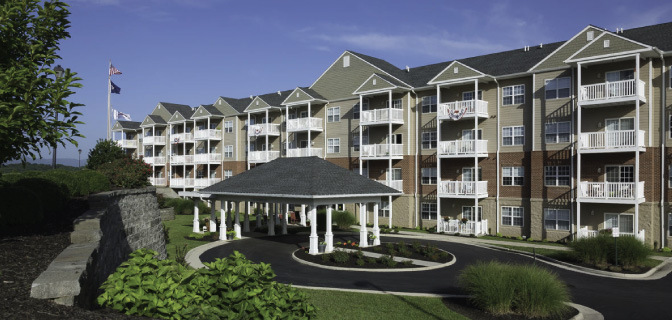
Senior Living Development
Senior Living
Since 1998, RSF has capitalized over $2.5 billion of Senior Living assets (155+ properties), both through acquisitions of existing assets as well as through the development of new communities. Investments are structured with an emphasis on alignment of interests between investors and operating partners. RSF invests in standalone communities and on a programmatic basis seeking to provide operators with the capital necessary to successfully execute their business plans and realize their goals. RSF continuously evaluates market and subsector opportunities with a general strategy characterized by:
1. Operator-centric approach: Due to the operating-intensive nature of the sector, RSF’s operating partners play a significant role in the success of each new investment. RSF has established, and continues to form, long-lasting relationships and exclusive partnerships with experienced senior living operators across the country.
2. Investment in under-supplied markets: RSF’s operating partners have proven track records and deep experience operating a specific property type in their respective markets. As such, operating partners are typically concentrated within certain regions. This regional focus enables RSF’s partners to source and thoroughly diligence prospective new investments in under-supplied markets with latent demand and favorable demographic characteristics. This approach creates an operating advantage as focused partners customize product design and tastes to meet specific consumer demands, navigate state and local regulations, and hire skilled labor locally.
3. Data-driven approach to evaluating investments: RSF’s investment approach is informed by its intensive use of national, local and proprietary data sets curated over 25+ years. In addition, RSF’s senior living team serves as industry leaders through their volunteer service to leading industry organizations.
4. Investment across the senior living sector: The senior living industry provides a combination of wellness, healthcare, hospitality, and real estate to its residents. RSF’s invests across the spectrum, with extensive experience investing in Independent Living, Assisted Living and Skilled Nursing facilities.
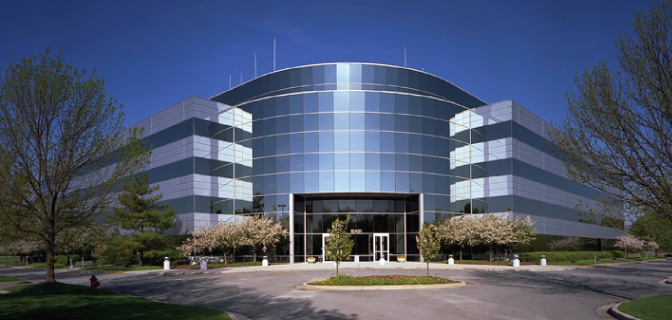
Meridian Plaza
Opportunistic Commercial Real Estate
Since 1998, RSF has capitalized over $1 billion of CRE assets (80+ properties), both through acquisitions of existing assets as well as through the development of new facilities. RSF leverages its experience and expertise to generate off-market deal flow and capitalize on overlooked, underperforming properties across geographies and within niche markets. RSF evaluates CRE opportunities with a general strategy characterized by:
1. Overlooked business plans: RSF targets CRE products and markets that have been overlooked by institutional real estate investors. For example, during the late 2010s and into the 2020s RSF partnered with a UK-based owner/operator beginning in December 2018 to invest in last mile logistics buildings in Western Europe. Although targeted markets such as London and Paris are among the top cities for institutional investors, RSF-targeted assets are often small, and related market data is relatively scarce, creating market inefficiencies and leading to opportunities for experienced, local sponsors.
2. Value-add properties: RSF works with local operating partners to pursue value-add investments, including: (1) properties that are underperforming in an otherwise stable market due to unique ownership circumstances (e.g., undercapitalized or non-local ownership) and can therefore be acquired at discounts to replacement costs, (2) new developments for which RSF can underwrite unique business plans (e.g., pre-existing relationship with a tenant for a build-to-suit, or add-on development to a project), or (3) asset classes that benefit from unique demographic or structural tailwinds (e.g., eCommerce, nearshoring, housing affordability).
3. Distressed assets: Over 25+ years, RSF has taken advantage of distress during market downturns. Examples of RSF’s prior distressed asset acquisitions include the purchase of an interest in a special servicer, which led to the off-market acquisition of 31 assets through defaulted mortgages or REO at an average acquisition cost of 63% of outstanding loan balance, and the purchase of a national portfolio of 8,280 residential lots across the US and an unfinished 265-condominium unit development from a distressed public company.



3899 Maple Avenue, Suite 250
Dallas, Texas 75219


©2017 RSF Partners, All Rights Reserved
Website Design and Development by Blue Cardigan Creative